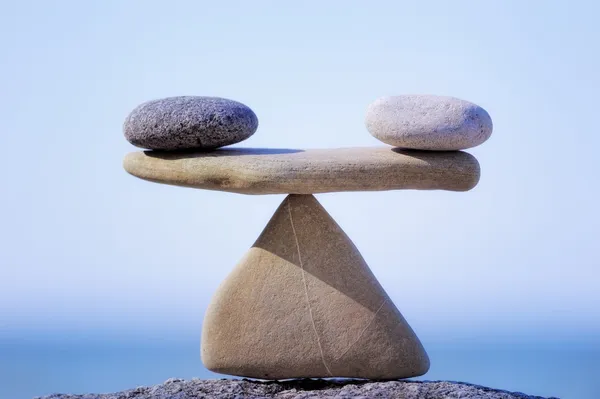


In a culture that often equates productivity with virtue, taking a vacation can feel almost indolent or even defiant. The calendar fills up, emails accumulate, and the to-do list stretches to an almost insurmountable length. Work becomes not simply what we do, but how we measure ourselves. I know I fall prey to this mindset, and, if I am being candid, it doesn’t bother me to define myself (at least in part) by my vocation. Still, stepping away from work, even briefly, is not an indulgence. It is a discipline… one that I have only recently understood.
Philosophers have long understood that distance clarifies what proximity obscures. The Stoics (here I go again) spoke of stepping back from daily noise to observe life more clearly. Henry David Thoreau (not exactly a classic Stoic) went so far as to withdraw to Walden Pond, not to escape work, but to understand it better. “I went to the woods,” he wrote, “because I wished to live deliberately.” In many ways, a vacation serves a similar purpose. It is a brief Walden.
Work demands focus, repetition, and persistence. These can be important, even valuable qualities. But when practiced without interruption, they can narrow perspective. The mind becomes efficient but not necessarily insightful. Creativity dulls and judgment becomes reactive rather than reflective. By leaving our routines, we allow the mind to wander beyond its usual boundaries.
There is a curious paradox here. Many people (like me) fear that stepping away from work will cause them to fall behind or even lose focus. Yet those who periodically detach often return sharper than before. What is the old adage: don’t always chop the wood; sometimes you should take time to sharpen the ax? The brain, like an instrument or muscle, benefits from rest. Neuroscientists call this the “default mode network,” the mental state activated when we are not actively solving problems. It is during these quiet moments, walking along a beach, driving through unfamiliar countryside, sitting on a porch with no agenda, that ideas quietly rearrange themselves.
Vacation also restores proportion. The urgent tasks that dominate our attention during the workweek often shrink when viewed from a distance. What once felt critical becomes merely important. What once might have felt stressful becomes manageable. Perspective, it turns out, is often just a change of scenery. Vacations – or any time away from your standard routine – do not have to be fancy or tropical or even lengthy. However, they do need to be intentional and allow for a genuine, honest break from routine.
There is another benefit that is less often discussed: vacations remind us that work is part of life, not its entirety. When we step away, we reconnect with the broader human experience – it might be a dinner that stretches long into the evening or a conversation that wanders without purpose or pretense, or even a morning where the only goal is to appreciate the sound of birds or the wind in the trees. These moments recalibrate our understanding of time and effort.
Aristotle wrote that leisure is the highest human pursuit, essential for flourishing and intellectual growth – and distinct from merely resting. Leisure (not idleness) is the space in which life can be fully experienced. In modern terms, leisure might look like a week in the mountains, a long road trip, or simply time spent on a long walk with your dog. Ironically, this return to leisure can deepen our commitment to work itself… that is often the case for me. When we remember why we work – to build, to contribute, to support the lives we care about – our efforts regain meaning and purpose. The tasks remain the same, but the mindset changes. A good vacation does not make us less productive; it makes us more intentional.
In the end, stepping away from work is not about escaping responsibility – it is about renewing it. By leaving our routines for a time, we return with clearer eyes, steadier energy, and a deeper appreciation for the work waiting for us. Counterintuitively, sometimes the most productive thing a person can do is close the laptop, step away from the desk and walk out the door. Whether weeks long or hours long, I am learning that time away from routine can be a wonderful reset and maybe even a recharge. And, if I come back tanner… that is a bonus!