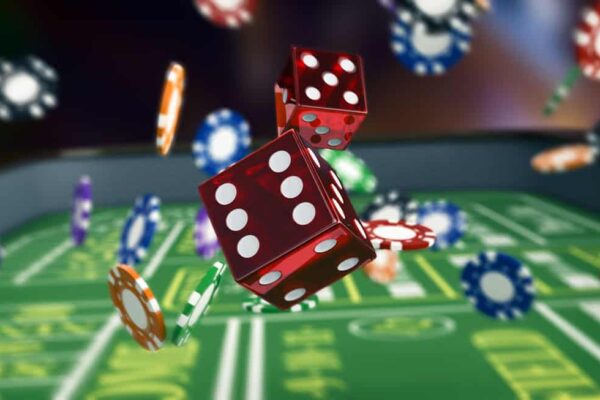


There is an uncomfortable resemblance between a casino and the modern investment world. Both seem to involve fancy settings and flashy characters. Both generate strong opinions from people who have recently been lucky. Both offer the possibility of making money without producing anything tangible during the transaction. And in both places, someone will eventually explain that he has developed a “system.” On that note… next week’s Weekly Whiteboard: My new “system”… ha ha. The similarities are real as investing and gambling both involve uncertainty, probability, risk, incomplete information, and the possibility of losing money. A poker player and an investor must each make decisions without knowing precisely what happens next. But similarity is not equivalence and investing is not inherently gambling. The more interesting concern is that investors are increasingly being encouraged to think like gamblers. For example, A deck of cards can be used for a friendly game, a professional poker tournament, or an ill-advised attempt to recover next month’s mortgage payment. The cards are the same but the behavior is not. Markets can work similarly. A stock can be purchased because an investor believes a productive business will generate growing cash flows over many years. The same stock can be purchased because its price is rising, strangers on the internet are excited, and the investor fears missing the next great fortune. The security has not changed. The philosophy has.
In my opinion, investing begins to resemble gambling when the primary objective shifts from owning productive assets to predicting short-term price movements. At that point, the investor is no longer asking, “What is this worth?” The question becomes, “Will someone pay me more for it soon?” That can work but the possibility of success does not establish the wisdom of the process. The mathematical distinction between investing and casino gambling begins with expected value. Expected value is not a prediction of what will happen during the next attempt. It is the average outcome we would expect if the same decision could be repeated many times.
Suppose a wager offers a 40% chance of winning $100 and a 60% chance of losing $100. The expected value of the wager is negative $20 (to be clear, the numbers describe the wager only, and historical experience is not a prediction.) You may win the next bet. You may win several in a row. But if you repeat it often enough, the mathematics will eventually become less interested in your recent hot streak. As one might expect, casino games generally have a negative expected value for the customer. That is how casinos pay for enormous buildings, elaborate fountains, and buffets of suspicious scale (no judgement, just saying…) Long-term investing of diversified portfolios, however, has historically offered a different proposition, one rooted in ownership of productive enterprises that employ people, sell goods and services, reinvest capital, and generate profits. Those businesses can pay dividends, repurchase shares, reduce debt, and grow their economic value. The investor is not merely hoping to take money from another participant. The underlying enterprise can create new wealth. This concept gives diversified, long-term investing a fundamentally different economic foundation from craps or blackjack. The casino depends on a mathematical advantage over its customers. Investing largely depends on the productive capacity of businesses and economies.
However, even a positive-expectation asset can be used in a negative-expectation way. For example, concentrated portfolios magnify the benefits of being correct AND the consequences of error. Also, when investing, price matters: an absurd price for an excellent business can still produce a disappointing investment. A sound asset does not rescue an unsound process.
Casinos also understand psychology extraordinarily well. They do not merely offer games – they create environments designed to sustain participation. One of their most powerful tools is the variable reward. While a predictable reward becomes boring, an unpredictable reward keeps the brain engaged. Sometimes the slot machine pays but usually it does not. Occasionally it pays just enough to encourage another pull. Markets offer their own version. A speculative trade may produce an immediate gain. The gain feels like evidence of skill, even when it was largely luck. That success encourages a larger trade, a shorter time horizon, or a more confident prediction. The market has delivered a reward, but the investor may have learned the wrong lesson. Psychologists call this reinforcement; philosophers might call it temptation… the casino manager would call it business as usual. Technology has made this feedback loop faster. Online accounts and, far worse, apps allow the investor to track prices in real time and received alerts announcing activity that may or may not matter. An investor can check a portfolio dozens of times each day, receiving small bursts of pleasure, anxiety, validation, and regret. A long-term ownership interest in a business has been transformed into a blinking object on a screen. The human brain was not built to observe thousands of tiny changes without assigning meaning to them. We look for patterns. We create narratives and, what’s worse is that we assume that movement demands action. Spoiler… generally it does not.
Both investing and gambling contain mixtures of luck and skill. The catch is that luck is easiest to recognize when it happens to someone else. If another person succeeds, we may attribute the outcome to favorable circumstances. If we succeed, we are inclined to credit analysis, judgment, and perhaps a previously undiscovered talent for macroeconomics.
This is self-attribution bias. Gains confirm our intelligence and losses are blamed on manipulation, the Federal Reserve, short sellers, algorithms, the financial media, or an insufficiently loyal market. Short periods make the distinction between skill and luck especially difficult to detect. A poor decision can produce a good result. A thoughtful decision can produce a bad result. One roll of the dice tells us almost nothing about whether the decision was intelligent. This is why professional gamblers, serious investors, and insurance companies all think in terms of repeated decisions and distributions of possible outcomes. They understand that process and outcome are related over time, but not necessarily correlated in any single instance.
But, to be clear, the gambler’s mindset is not defined solely by risk. And, as it relates to investing, refusing all risk would make long-term investing nearly impossible. Investing is defined by the relationship with risk. The gambler seeks stimulation, where (at least theoretically) the investor seeks an appropriate return. The gambler wants an outcome while the investor develops a process. The gambler might focus on the next result while the investor focuses on a long series of decisions. And, whether an investor or really any other decisions making situation in life, it is fundamental to understand that patience is an active choice. After all, the universe is under no obligation to honor our cost basis.
Another subheading for investing (that is not always true for gamblers) is that avoiding loss is impossible. The more important objective is to avoid losses that prevent continued participation. Consider an investment that falls 50%. It must subsequently gain 100% merely to return to its original value. This asymmetry is simple but profound. Large losses do more than hurt emotionally – they reduce the capital available to benefit from future opportunities. Gambling culture often emphasizes maximum payoff while the investment discipline emphasizes survival. This is why diversification can feel unsatisfying during speculative booms. Diversification creates the likely outcome that part of the portfolio will appear disappointing compared with whatever happens to be winning. Diversification’s purpose is to reduce dependence on any single prediction. The investor who survives uncertainty does not need perfect foresight.
Time horizon also changes the nature of the activity. A casino compresses the relationship between decision and outcome. Productive investing unfolds differently. Businesses need time to innovate, compete, reinvest, and compound. The economic engine operates over years, while market prices operate every second. This mismatch creates temptation. Ideally, an investor own long-duration assets but judge them over long-duration periods… I said ideally because increasingly, judgment happens over a relatively short period of time. Imagine purchasing an apartment building and receiving an updated offer for it every seven seconds. Some offers would be sensible and others would be absurd. A few might be accompanied by breaking news, technical charts, and some guy on television shouting about momentum. The building would remain the same building. Public markets provide liquidity, which is enormously valuable. They also provide a constant invitation to reconsider decisions that may not require reconsideration. Liquidity is a feature. Compulsive use of liquidity is a behavior. Ironically, the casino may be most dangerous immediately after you win. Losses can make people cautious. Early gains can make them fearless. A person who doubles money quickly may conclude that the outcome resulted from exceptional insight. Risk tolerance rises because the money begins to feel less real. Behavioral economists call this the “house money effect.” Of course, once the money is yours, it is no longer the house’s money… it is simply your money wearing a fake beard and funny hat. This is one reason speculative cultures feed on visible success. Winners are celebrated, interviewed, reposted, and imitated. The much larger population of unsuccessful participants tends to disappear quietly. We see the person who made a fortune on one concentrated bet. We do not see the thousands of people who made similarly confident bets on different outcomes. This is survivorship bias, and it is one of the most effective advertising departments in finance. The number of failed investors, hedge funds, etc. lost to spam folder of time should make all long-term investors understand survivorship bias.
Of course, the answer is not to drain investing of all uncertainty. Risk and uncertainty are unavoidable. The goal is to approach them with a different philosophy. Before making a decision, an investor might ask whether he is buying an asset or merely betting on its next price movement. What is the expected return? What assumptions are necessary to produce it? How much could be lost if those assumptions are wrong? Would that loss damage the financial plan or merely bruise the ego? Has something meaningful changed, or did the recent price simply move? One particularly useful question is this: would I make the same decision if I could check the price only once a year? These questions are not designed to eliminate risk, rather, they are designed to reveal motive.
There may be nothing wrong with placing a wager for entertainment, provided the stakes are affordable and the activity is understood. The danger begins when speculation is called investing, entertainment is called strategy, and luck is mistaken for skill. The modern investment culture often rewards speed, certainty, conviction, and activity. Successful investing frequently requires patience, humility, probabilistic thinking, and the willingness to look boring. That is not an easy message to sell – I assure you! “Own a diversified collection of productive assets, control costs, manage risk, and allow time to do the heavy lifting” lacks the excitement of a “hot tip”. Few people have ever leaned across a crowded casino table and whispered, “You should see this disciplined rebalancing policy.”
The casino thrives because human beings crave action, patterns, stories, and immediate rewards and investment markets can provoke the same instincts. The important distinction is not whether investing contains risk, it is whether we approach that risk as owners of productive assets or as players searching for the next winning hand. Investing has always required living with uncertainty. Sometimes taking a calculated investment risk may be appropriate. Most often, however, the key is to remember that investing was never supposed to be a game.